
Why Iran
The Origin of Excellence — Why the World’s Finest Craftsmanship Comes From Persia
something authentic together.
For thousands of years, one land has set the standard for carpets, spices, and decorative arts. Understanding why begins with understanding Iran.
Why Iranian Products Are Famous
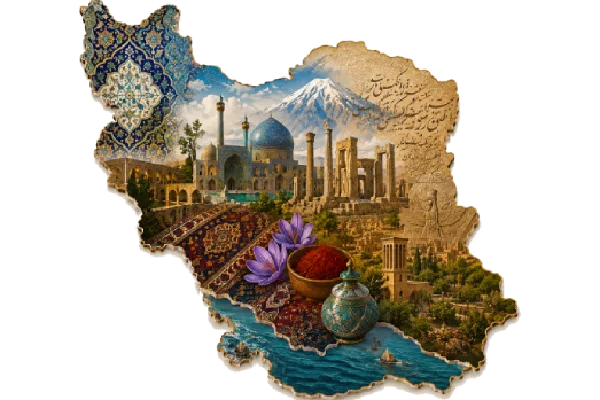
Iran — historic Persia — is one of the oldest continuous civilizations on earth, and its reputation for craftsmanship is no accident. It is the product of geography, history, and an unbroken tradition of mastery.
The land itself is extraordinary: highland plateaus perfect for saffron, pastures that produce fine wool, and a wealth of natural materials for dyes and decorative arts.
Across millennia, Persian artisans refined their techniques in royal workshops and village ateliers alike, developing standards of quality that the world still measures itself against. Persian carpets, Persian saffron, and Persian handicrafts are not merely from Iran — they are the benchmarks of their categories, the originals that others imitate.
When a buyer chooses genuine Iranian goods, they are choosing the source of the tradition, not a copy of it.
That authenticity carries real value in luxury and specialty markets — and it is exactly what Sylaren delivers.
Persian Carpet Heritage
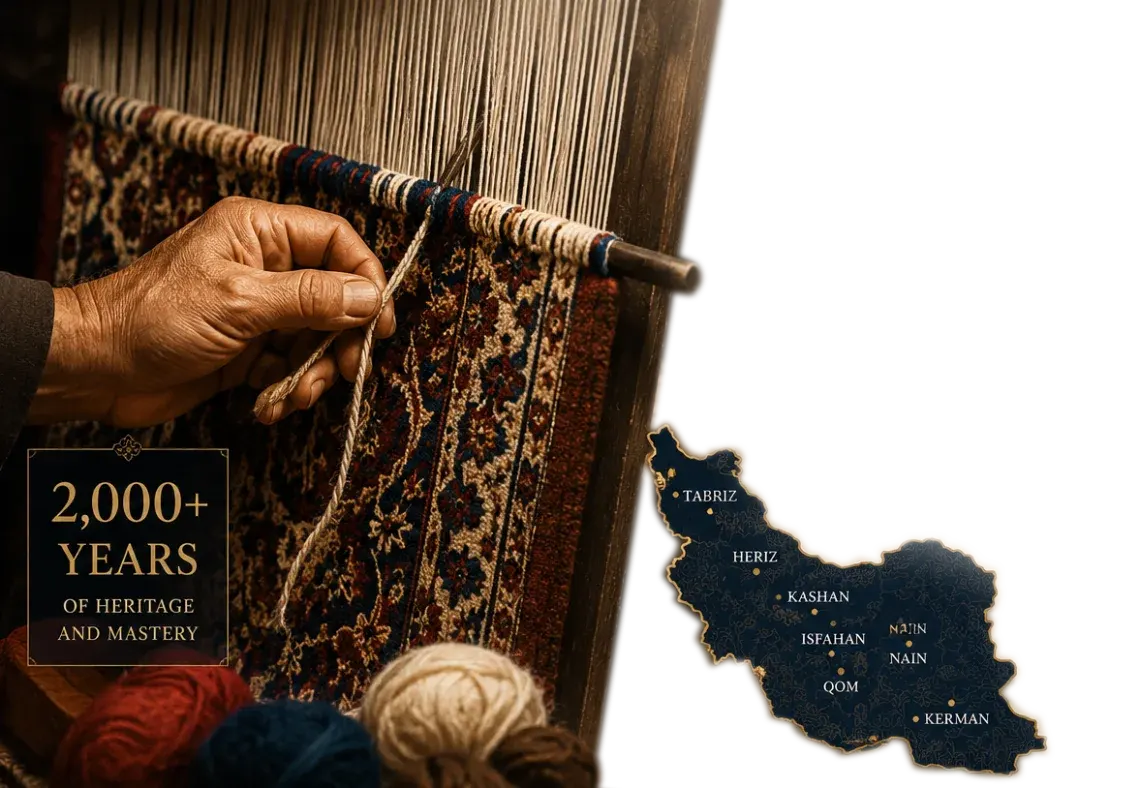
The Persian carpet is arguably Iran’s greatest artistic gift to the world. Its history stretches back more than two thousand years, and its techniques have been refined across countless generations of weavers. What sets Persian carpets apart is the marriage of artistry and endurance.Each region — Tabriz, Kashan, Isfahan, Nain, Qom, Kerman, Heriz, and more — developed its own distinctive designs, palettes, and knotting styles.
The finest carpets are hand-knotted from wool and silk on cotton or silk foundations, colored with natural dyes, and built to last generations.
A single fine carpet can take a weaver months or years to complete, and, properly cared for, becomes more valuable with time.
A single fine carpet can take a weaver months or years to complete, and, properly cared for, becomes more valuable with time.
Persian Saffron
Iran produces the overwhelming majority of the world’s saffron, and the finest saffron on earth comes from its highlands.
The arid, high-altitude regions of Khorasan provide ideal conditions for the saffron crocus. Each autumn, the flowers are harvested by hand at dawn, and their three crimson stigmas are carefully separated and dried.
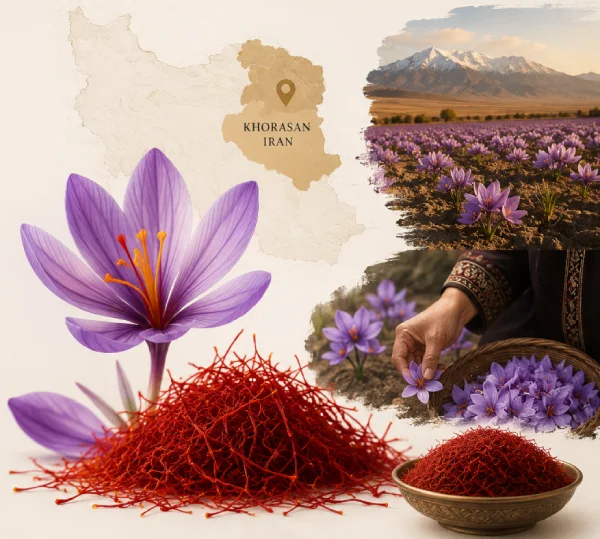
It takes many thousands of flowers to yield a single kilogram — which is why saffron has been treasured as "red gold" for centuries.
Iranian saffron is distinguished by its exceptional crocin (color), picrocrocin (taste), and safranal (aroma) — the three measures by which saffron quality is judged under ISO standards.
Premium grades like Negin and Super Negin are prized worldwide by chefs, food brands, and connoisseurs. For any buyer serious about quality, Iranian origin is the mark to look for — and Sylaren sources directly from it.
Iranian Handicrafts
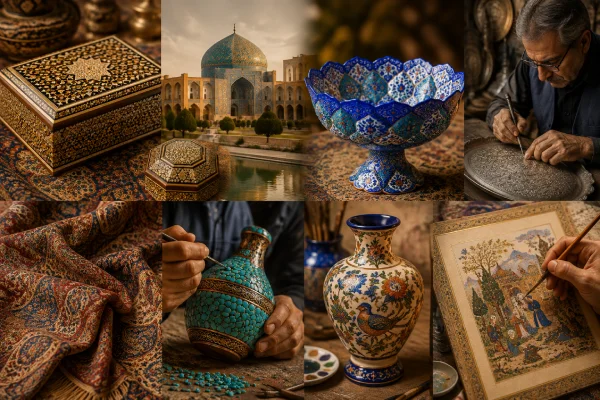
Iran’s decorative arts are among the most sophisticated in the world, centered in cities like Isfahan that have been craft capitals for centuries.
The range is remarkable: Khatam-kari micro-mosaic marquetry, Mina-kari enameling , Ghalam-zani metal engraving, Termeh handwoven textiles, turquoise inlay, hand-painted ceramics, and Persian miniature painting.
Each craft demands years of training and immense patience — a single Khatam box can contain thousands of hand-cut pieces; a Mina bowl requires repeated firing and meticulous hand-painting.
These are not mass-produced souvenirs. They are authentic works of art, each carrying the signature of a tradition and, often, of an individual master. For boutiques, galleries, and gift retailers, they offer inventory with genuine depth and a story that mass-market goods can never match.